“I create art to make visible what we cannot see – but feel. In my creative process, I combine music, energy, and visual art into an expression that transcends the purely visible. My works arise from intensity and movement, from an inner urge to make the invisible tangible.”
I'm not just interested in shapes and colors, but in the worlds behind them: myths, ancient cultures, rituals – and the forces that influence our lives without our being able to fully explain them. In a time when so much has become measurable, categorizable, and seemingly unambiguous, I consciously turn my gaze back to the mysterious: to that which reveals itself only as resonance.
My art is not a finished image. It is a space—a space for projection, memory, and wonder. I work with uncompromising inquiry, not to provide answers, but to reopen questions. Why does a rhythm, a symbolism, a glimpse into the darkness move us? What happens when we don't avoid the unexplained, but instead allow it?
I believe that we are more than what can be measured. That there are levels we don't need to prove in order to know them – because we feel them. That's precisely where connection arises: with ourselves, with each other, and with something greater that cannot be grasped.
My works are invitations. Not just to look at, but to experience – so that wonder, myth, and the immeasurable can once again find their natural place in our reality.”
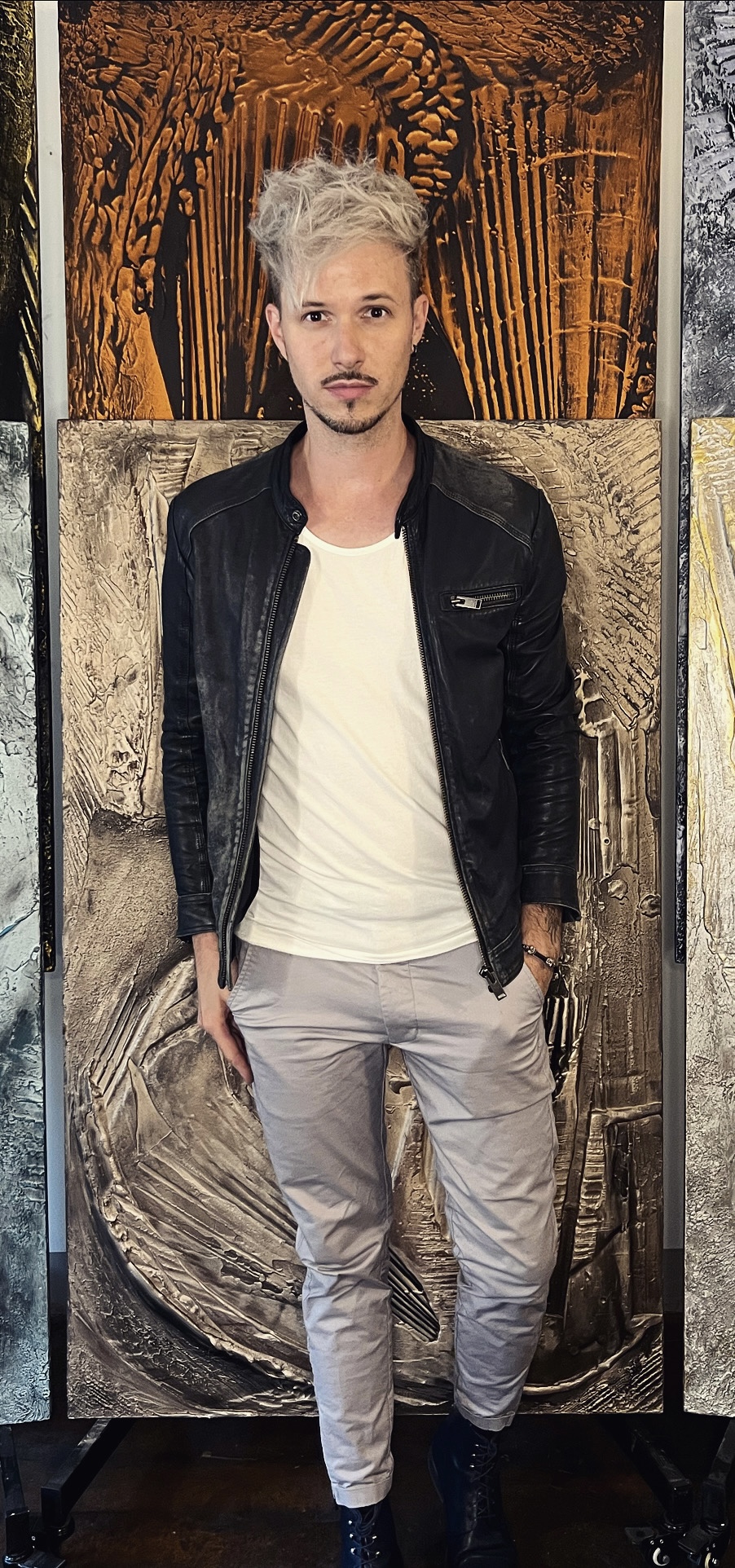
Mutrea (*1986) is a contemporary artist who has consistently turned a rare dual talent into a trademark: He combines music and visual art in such a way that sound not only remains audible, but becomes visible as material, structure and energy.
The trigger was a single sentence that changed everything. In 2008, his music wasn't taken seriously by those close to him – he was advised to learn "something respectable." Instead of letting himself be belittled, Mutrea reacted in his own way: he sought a second avenue to not only demonstrate his creativity but also to expand it. Music alone was suddenly no longer enough to express what was stirring within him. So he turned to plaster, wood, and pigments and created his first work – not as a "new hobby," but as a visual continuation of rhythm, pressure, and emotion. The moment was pivotal because the result convinced precisely those who had previously ridiculed him.
Mutrea realized: If sound creates images within him, he can merge both into his own language – and thus create an intensity that goes beyond the purely visual.
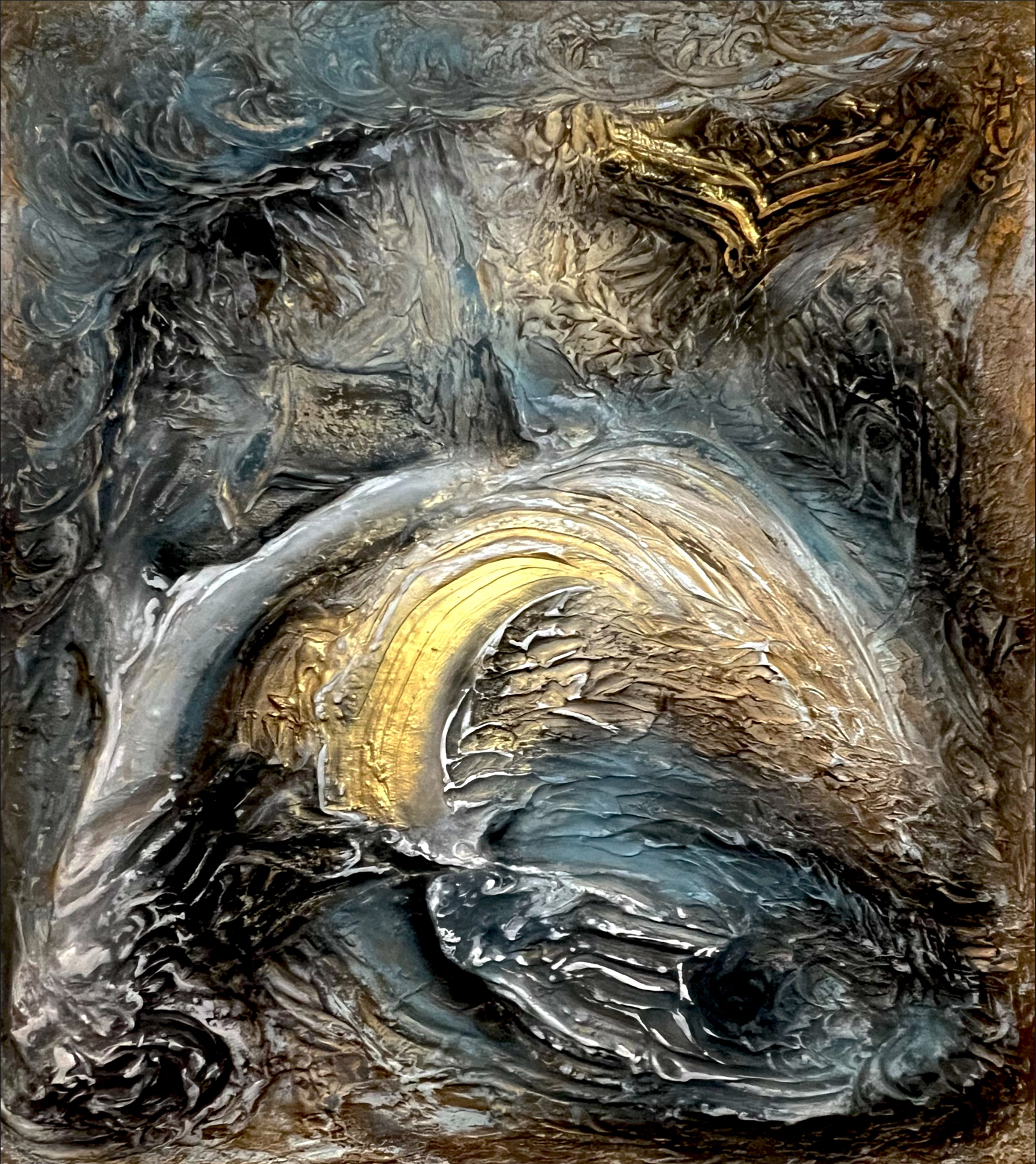
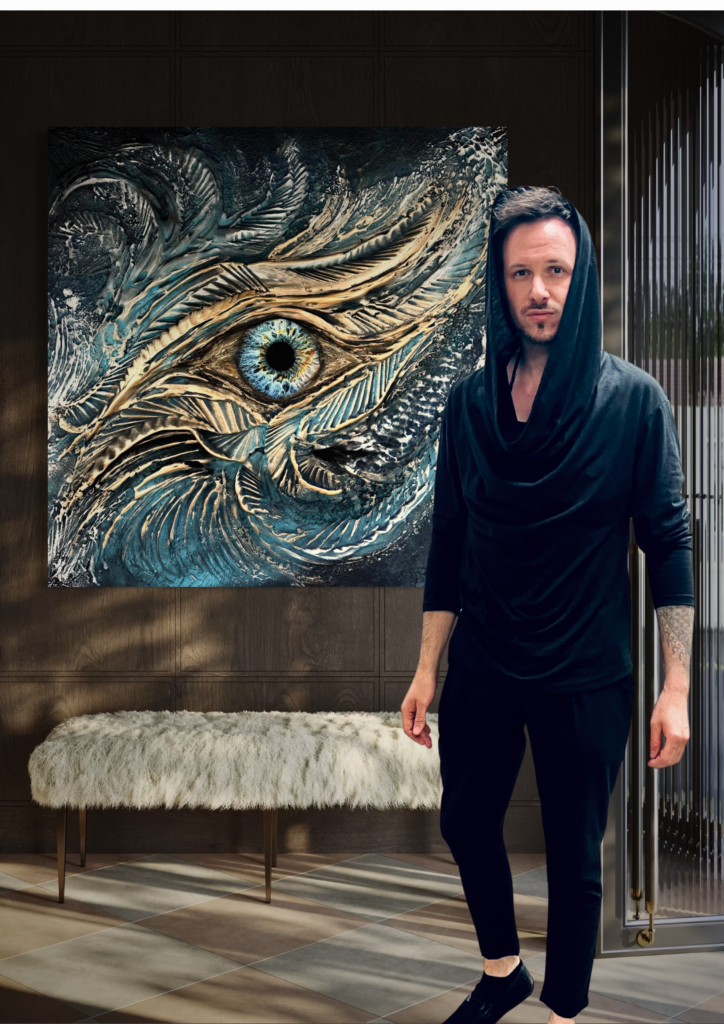
From then on, his development unfolded in two directions – mutually reinforcing each other. As a musician, he performed in over 1,000 live concerts on international stages, learning how energy is generated: building tension, maintaining rhythm, creating presence. He translates this experience into his art. His works are created on wooden panels with plaster and mineral pigments, in a physical process of layering, compression, and deliberate breaks. The surfaces appear not merely decorative, but charged – as if movement were frozen in matter. Music is not the background, but an integral part of the creative process: it dictates tempo, pressure, and dynamics, and becomes legible in the work as a palpable presence.
Thematically, Mutrea follows the same logic: making the hidden visible. Just as he uncovered an undiscovered power within himself, he directs his gaze towards myths, ancient cultures, rituals, and those energies that operate beyond measurement. His works are not illustrations, but spaces for resonance – they invite us to expand our perception and give the mysterious a place once again.
Mutrea lives and works in Zurich, Switzerland. His works are increasingly attracting interest from collectors and art enthusiasts because they possess a clear unique selling point: an art that is not merely "inspired by music," but combines sound, physicality, and conceptual depth into an independent, recognizable position in the contemporary art market.